PAT Spectroscopy in ATEX Zones
Real‑time process analytics for hazardous environments
Process plants operating in ATEX Zone 0, 1 and 2 environments face a unique challenge: how to obtain real‑time, high‑quality process data without compromising safety. Spectroscopy‑enabled PAT provides a powerful solution—delivering continuous CQAs, reducing waste, and improving control even in the most demanding hazardous areas.
Clairet Scientific specialises in deploying Raman, NIR, FTIR and UV‑Vis spectroscopy directly into production areas, including ATEX‑classified zones, with fully certified instruments, probes, housings, and laser systems.
Why ATEX‑Ready PAT Matters
Safety without compromise
Hazardous areas require equipment that prevents ignition sources. ATEX‑certified PAT systems allow continuous monitoring without manual sampling, reducing operator exposure and eliminating unnecessary interventions.
Real‑time CQAs in hazardous processes
Crystallisation, reactions, polymerisation, and solvent‑rich processes often occur in ATEX zones. PAT spectroscopy provides continuous, in‑process measurement of:
- Reaction conversion
- Polymorph transitions
- Solvent composition
- Supersaturation
- Nucleation and growth behaviour
- Endpoint determination
Improved efficiency and reduced waste
Real‑time PAT reduces cycle time, improves consistency, and supports continuous manufacturing—key sustainability goals highlighted across Clairet’s PAT guidance.
ATEX Zones Explained
- Zone 0: Explosive atmosphere present continuously
- Zone 1: Likely to occur during normal operation
- Zone 2: Unlikely, and only for short periods
Clairet provides solutions for Zone 1 and Zone 2, including certified enclosures, ATEX Raman lasers, and intrinsically safe probe systems.
Spectroscopy Techniques for ATEX Environments
Raman Spectroscopy: ATEX‑Ready
Raman is ideal for chemical reactions, crystallisation, and polymorph monitoring. Clairet supplies:
- Bruker Tornado HyperFlux PRO Plus – high‑sensitivity Raman for process monitoring
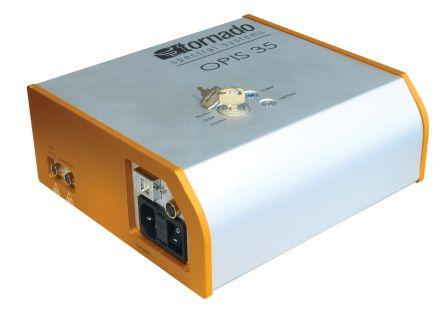
- OPIS 35 ATEX Raman Laser – fully ATEX‑certified Raman excitation
- ATEX housings and probe options for reactors and pipelines
Long runs of fibre optics are available for Raman spectroscopy permitting the spectrometer to be located in a safe area with the fibre-coupled probe in the Zone
NIR Spectroscopy: ATEX Ready
NIR is excellent for powders, slurries, and moisture/composition measurements. Clairet offers:
- Indatech NIR systems with ATEX‑ready configurations
- Zeiss Corona process NIR for solids and slurries
- Non‑contact NIR options for dusty or abrasive environments
- ABB Talys FT‑NIR
Long runs of fibre optics are available for NIR spectroscopy permitting the spectrometer to be located in a safe area with the fibre-coupled probe in the Zone
FTIR: ATEX Certified Enclosures
FTIR provides strong, easily interpretable peaks—ideal for liquid‑phase reactions. Available options include:
- ABB MB‑Rx fibre‑coupled mid‑IR
- ATEX housings for FTIR deployment
Fibre optics for FTIR can only be used up to a maximum 4 metres, so for this technique the spectrometer needs to be in a certified enclosure.
UV‑Vis: ATEX‑Certified Enclosures
UV‑Vis is ideal for concentration, and supersaturation control. Clairet supplies:
- Asuryan UV‑Vis
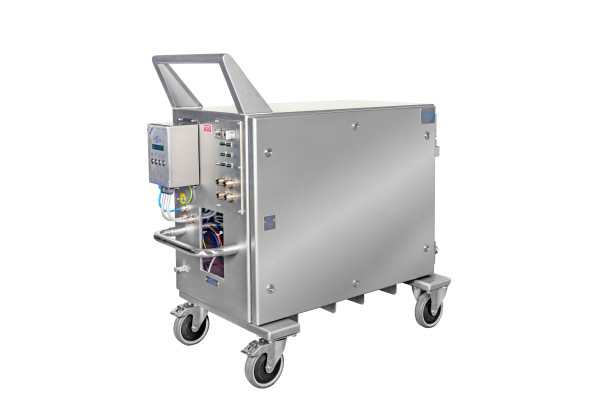
- ATEX Zone 1 certified enclosure for Asuryan UV‑Vis
Fibre optics for UV-Vis can only be used up to a maximum 4 metres, so for this technique the spectrometer needs to be in a certified enclosure.
Applications: PAT in ATEX Crystallisation
Crystallisation is one of the most common ATEX‑zone processes. PAT spectroscopy enables:
1. Real‑time supersaturation control
Raman and UV‑Vis provide continuous measurement of solute concentration and turbidity.
2. Polymorph identification
Raman’s specificity allows immediate detection of unwanted polymorph transitions.
3. Nucleation and growth monitoring
Spectroscopy tracks crystal formation, enabling tighter control of particle size distribution.
4. Solvent composition tracking
FTIR and Raman measure solvent ratios during anti‑solvent addition.
5. Endpoint determination
Real‑time CQAs replace manual sampling, improving safety and reducing cycle time.
ATEX‑Ready Hardware from Clairet Scientific
Clairet provides a full suite of ATEX‑compatible PAT tools:
- OPIS 35 ATEX Raman Laser
- ATEX Zone 1 certified enclosure for Asuryan UV‑Vis
- ATEX housings for Raman, NIR, FTIR probes
- Fibre‑optic probes and flow cells designed for hazardous areas
- Non‑contact NIR, Raman and UV‑Vis systems for dusty or abrasive environments
All systems are supported by:
- Feasibility studies
- Installation and commissioning
- Chemometric model development
- Training and ongoing support
Implementation Roadmap
- Feasibility Study Evaluate Raman, NIR, FTIR, UV‑Vis for your specific ATEX process.
- ATEX Compliance Review Confirm zone classification, probe placement, and enclosure/location requirements.
- Probe & Instrument Selection Choose the optimal technique and hardware for your CQAs.
- Installation & Integration ATEX‑certified deployment into reactors, pipelines, or crystallisers.
- Chemometric Model Development Build robust PLS, PCA, CLS or univariate models.
- Real‑Time Control Integrate PAT data into DCS/PLC systems for automated control.
Why Clairet Scientific?
- 30+ years of PAT expertise
- Deep experience installing spectroscopy in hazardous production areas
- Partnerships with leading instrument manufacturers
- Full lifecycle support: feasibility → installation → modelling → optimisation
- ATEX‑ready solutions across Raman, NIR, FTIR, UV‑Vis
- Commitment to sustainability and reduced energy/waste through PAT
Ready to Deploy PAT in Your ATEX Zone?
Clairet Scientific can help you evaluate, select, and implement the right spectroscopy technique for your hazardous environment.
Request an ATEX Compatibility Assessment or Book a PAT Feasibility Study